14 November 1943
Fabrizio’s Childhood
Nine-year-old [Fabrizio Collini](entity:character-recall-character-fabrizio-collini-36e3b3a1d7d1) rides home from confirmation class across the fields to his family farm. He is absorbed in the small, vivid world of animals, games, and hunger, while the war remains mostly an adult concern beyond his understanding.
His father has secretly joined the partisans, and the German occupation has begun to shape the village’s fears. The child’s ordinary day is about to be torn apart by violence.
14 November 1943
His Father Is Taken
When Fabrizio reaches the farm, his sister tells him that German soldiers have taken their father away. She is crying, and she cannot explain where he has been taken or what will happen to him.
The siblings try to carry on with the practical rituals of home, but the danger returns almost immediately. Their father’s arrest leaves the children exposed and alone.
14 November 1943
The Farmhouse Attack
A German soldier arrives at the farm while Fabrizio’s sister urges him to run and hide. From the dog kennel, he hears her scream, then returns to the kitchen and finds the soldier assaulting her at gunpoint.
Fabrizio’s scream startles the soldier; the girl’s locket catches on the pistol, and the weapon fires into her neck. The boy escapes, carrying the image of the soldier’s pale eyes and the sudden, senseless violence with him.
14 November 1943
The Farm Is Burned
Fabrizio runs to his uncle, [Uncle Mauro](entity:character-recall-character-uncle-mauro-9160fbad48fc), and tells him what has happened. When Uncle Mauro returns to the farm, he tells the boy that the house has been burned and his sister is dead; the animals have scattered, and their father is missing.
Fabrizio worries about the animals even as he tries to understand his sister’s death. Uncle Mauro draws him close and promises that he will stay with his family, giving the orphaned child a place to belong.
The days after 14 November 1943
Mauro Finds the Prison
[Uncle Mauro](entity:character-recall-character-uncle-mauro-9160fbad48fc) travels to [Genoa](entity:location-recall-location-genoa-e7c43cca04b7) to discover where Fabrizio’s father has been taken. After several days, he returns with an official notice identifying the prison and naming the German officer in charge: [Hans Meyer](entity:character-recall-character-hans-meyer-7345ebff6a11).
The paper gives Fabrizio a name to attach to the disappearance of his father. It also establishes the connection that will shape the case decades later.
16 May 1944
The Café Trento Bombing
At night in [Genoa](entity:location-recall-location-genoa-e7c43cca04b7), a partisan plants a delayed explosive at [Café Trento](entity:location-recall-location-caf-trento-222bc23e6d03), where German soldiers regularly gather. The bomb detonates after he has left, killing two men and injuring others.
The attack becomes the pretext for a reprisal. The interpreter who later recounts the events understands that the German authorities will answer the bombing with what they call uncompromising measures.
The early hours after 16 May 1944
The Prisoners Are Selected
The German authorities order twenty prisoners from [Marassi Prison](entity:location-recall-location-marassi-prison-24548c0b2dc6) to be taken away. The interpreter is made to call them by number, and the prisoners understand from the lie that they are being transferred that they are likely to be killed.
None of the twenty has been shown to have taken part in the bombing. The reprisal treats them as substitutes for the unknown attackers, turning a search for justice into collective punishment.
The morning after 16 May 1944
The Execution in the Ravine
German marines take the prisoners to a ravine and bind them in pairs. One group at a time is led to a plank beside a pit, where the men face the firing squad without blindfolds; an older soldier descends afterward to shoot those still alive.
The interpreter watches as the prisoners see the bodies of those killed before them. One man cries [“Viva Italia!”](entity:expression-recall-expression-viva-italia-9c5ad1fbede0) before he is shot, and the scene leaves the interpreter with the knowledge that this is not battle but people killing people.
The evening after the execution
The Names Are Remembered
The interpreter returns to [Genoa](entity:location-recall-location-genoa-e7c43cca04b7) and tells his wife what happened. She strikes him in horror, and he gives her the list of prisoners he has taken from the prison; the first name is Nicola Collini.
Days later, the news reaches Fabrizio’s village. [Uncle Mauro](entity:character-recall-character-uncle-mauro-9160fbad48fc) tells the sleeping boy that he is his son from then on, making the child’s loss permanent while giving him a new family.
1963–1965
The Auschwitz Trials
The Auschwitz Trials bring the crimes of the Nazi period before a broad German public. The hearings confront people with the scale of the past, though the society’s understanding of responsibility continues to change over time.
Decades later, this shift in public judgment will matter to the argument over how courts should assess wartime conduct. The trial’s legal questions are inseparable from the country’s changing willingness to face its history.
After the Second World War and before 1968
Dreher’s Legal Career
During the [Third Reich period](entity:time-recall-time-7002a76259e8), [Dr Eduard Dreher](entity:character-recall-character-dr-eduard-dreher-cdb7eb25d803) serves as a senior prosecutor at a special court and calls for severe punishment in cases involving minor offences. After the war, he resumes legal practice and is appointed to the Federal Ministry of Justice in 1951, eventually becoming a leading criminal-law official.
His later role in drafting a seemingly technical amendment will have far-reaching consequences. The statute’s effects will help shield Nazi-era accessories to murder from prosecution, though Dreher’s own responsibility remains contested.
1 October 1968
The 1968 Amendment
An unremarkable-looking law, the [Introductory Act to Administrative Offences](entity:rule-recall-rule-introductory-act-to-admi-6a6de8c26653), changes the rules governing [Section 50 of the Federal German Criminal Code](entity:rule-recall-rule-section-50-of-the-federa-660416ea482e). The alteration affects how accessories to crimes are punished, while its impact on limitation periods goes unnoticed by lawmakers and legal officials at the time.
Because Nazi functionaries are often classified as accessories rather than principal murderers, the change creates a path by which many cases can no longer be prosecuted. What appears to be a procedural adjustment becomes a turning point in the country’s reckoning with Nazi crimes.
1968
The Meyer Investigation
[Fabrizio Collini](entity:character-recall-character-fabrizio-collini-36e3b3a1d7d1) files a complaint with the [Stuttgart Public Prosecutor’s Office](entity:organization-recall-organization-ada4fe276d6a) against [Hans Meyer](entity:character-recall-character-hans-meyer-7345ebff6a11), whom he identifies as the officer responsible for his father’s execution. He has done what the legal process requires and waits for the authorities to investigate.
The investigation concerns a killing that has already been described in the records of the reprisal. Its outcome will determine whether the law can offer Collini any answer—or whether procedure will close the door instead.
7 July 1969
The Investigation Is Dropped
The [Stuttgart Public Prosecutor’s Office](entity:organization-recall-organization-ada4fe276d6a) discontinues its investigation into [Hans Meyer](entity:character-recall-character-hans-meyer-7345ebff6a11). The decision does not establish that the execution was lawful or that [Meyer](entity:character-recall-character-meyer-b771b4ab7a30) was innocent; the proceedings end because the applicable limitation period has expired.
[Fabrizio Collini](entity:character-recall-character-fabrizio-collini-36e3b3a1d7d1) receives notice on 21 July. The official letter gives him no hearing on the underlying guilt, only a procedural ending that leaves the loss of his father unanswered.
Caspar Leinen’s childhood
Two Boys at Rossthal
[Caspar Leinen](entity:character-recall-character-caspar-leinen-dfbe4df19f10) spends holidays at [Rossthal](entity:location-recall-location-rossthal-6c7dae823ed4) with [Philipp](entity:character-recall-character-philipp-d45193a41691), whose family estate is a place of warmth and ease compared with Caspar’s cold, isolated home. The boys roam the grounds, fish, and make plans, largely untouched by the adult world around them.
[Hans Meyer](entity:character-recall-character-hans-meyer-7345ebff6a11) is the grown-up who gives them time and attention. His patience and generosity make him a beloved presence in Caspar’s childhood, a bond that will later complicate Caspar’s work as a defense lawyer.
During Caspar Leinen’s childhood
The Horse’s Death
[Hans Meyer](entity:character-recall-character-hans-meyer-7345ebff6a11) tells Caspar about the horse that broke its leg after being startled in a paddock. As a boy, Hans had believed that his brightly colored shirt frightened the animal, and his father made him feel responsible for its death.
Caspar gently tells him that the shirt could not have caused the accident because horses do not see color as people do. The exchange shows the trust between them and the old guilt Hans has carried since childhood.
Several years after Caspar and Philipp’s first summers at Rossthal
Johanna Comes Home
[Johanna Meyer](entity:character-recall-character-johanna-meyer-9457d4658c02) arrives at [Rossthal](entity:location-recall-location-rossthal-6c7dae823ed4) from England and surprises [Philipp](entity:character-recall-character-philipp-d45193a41691) and Caspar. Caspar is immediately struck by her poise and beauty, while she treats him with affectionate ease.
Her short visit leaves him longing for her after she returns to England. She becomes bound in his memory to the estate and to the fragile happiness of the boys’ shared youth.
The summer before Caspar Leinen’s final school year
A Summer in Venice
Caspar and [Philipp](entity:character-recall-character-philipp-d45193a41691) drive to Venice in Philipp’s small red car, spending their days sailing, playing tennis, and exploring the city. Their carefree holiday seems to suspend the obligations waiting at home and school.
The trip becomes one of the last bright stretches of their youth. Its remembered ease will sharpen the loss that follows.
The end of the Venice summer
Johanna’s Kiss
After swimming, Johanna lies beside Caspar and kisses him before running back toward the sea. The moment is brief and playful, but it fixes itself in his memory as one of the happiest experiences of his life.
Caspar cannot follow her invitation or turn the kiss into a lasting relationship. The tenderness remains suspended in the past, bound to the summer before everything changes.
Less than a year after the Venice summer
The Meyers’ Fatal Crash
After the school-leaving celebrations, [Philipp](entity:character-recall-character-philipp-d45193a41691)’s parents drive him home toward [Rossthal](entity:location-recall-location-rossthal-6c7dae823ed4). Their car passes beneath a timber truck in a narrow lane; the logs tear through the roof, killing Philipp and both of his parents.
The accident destroys the family that had made Rossthal a refuge for Caspar. It also turns the future he imagined with Philipp into an irretrievable past.
The days after the crash
The Funeral at Rossthal
At the funeral, the priest speaks of [Philipp](entity:character-recall-character-philipp-d45193a41691)’s promise and goodness but says nothing about the closed coffin or the violence of the crash. Caspar leaves before the service ends and watches the burial from the funerary chapel.
[Hans Meyer](entity:character-recall-character-hans-meyer-7345ebff6a11) stands through hours of condolences, supported by Johanna, then withdraws into his study. The formal rituals offer no relief from the deaths that have emptied the family home.
The evening of the funeral
Chess with Hans
Caspar visits [Hans Meyer](entity:character-recall-character-hans-meyer-7345ebff6a11) in his study, and they play chess in silence. Hans tells the boy about the childhood accident that taught him to think of himself as responsible for a horse’s death.
Caspar tries to comfort him, and Hans embraces him before asking to be alone. The next morning Caspar finds the chess set on the passenger seat of his car, a quiet keepsake from the man who has become his surrogate elder.
After military service
Caspar Studies Law
[Caspar Leinen](entity:character-recall-character-caspar-leinen-dfbe4df19f10) studies law in Hamburg after completing his military service. Since [Philipp](entity:character-recall-character-philipp-d45193a41691)’s death, he often feels detached from himself, as if he were watching his own body from outside.
He carries a sense of unease about his father’s character and his own inherited disposition. The distance he feels from himself becomes part of the private cost of his later work in criminal defense.
Four years after Philipp’s death
Johanna’s Wedding
Caspar returns to [Rossthal](entity:location-recall-location-rossthal-6c7dae823ed4) when Johanna marries an English professor twenty years her senior. After the ceremony, she whispers that she misses [Philipp](entity:character-recall-character-philipp-d45193a41691) and touches Caspar’s cheek.
He holds her arm and kisses her hand, briefly imagining that they might still have a life together. The moment passes without changing either of their futures.
Before the Collini case
Mattinger’s Rise
[Richard Mattinger](entity:character-recall-character-richard-mattinger-4e2a485cfbc4) becomes known as an uncompromising defense lawyer during the terrorism trials of the 1970s. He insists that justice depends on a fair trial and earns a reputation for persistence in court.
Over time, his clients become increasingly wealthy and powerful, and he appears less often at trial. Though he continues to believe in the rule of law, he senses that he may have lost something in leaving the courtroom battles behind.
23 May 2001
Collini’s Arrival at the Adlon
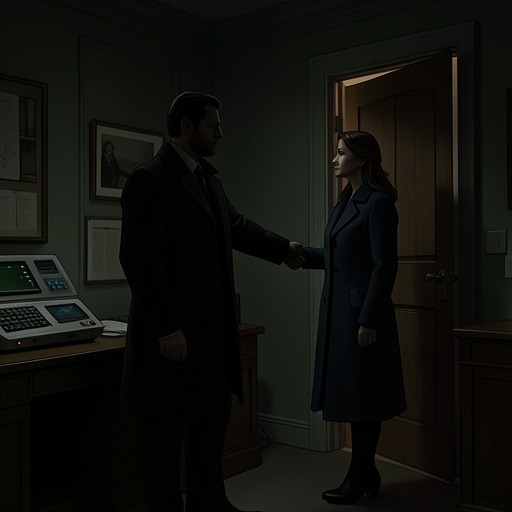
[Fabrizio Collini](entity:character-recall-character-fabrizio-collini-36e3b3a1d7d1) goes to the [Hotel Adlon](entity:location-recall-location-hotel-adlon-ec63c8b6d60e) and presents himself as a journalist seeking an interview with [Hans Meyer](entity:character-recall-character-hans-meyer-7345ebff6a11). [Meyer](entity:character-recall-character-meyer-b771b4ab7a30) welcomes him into the Brandenburg Suite, unaware that the visitor has come to kill him.
The room is cool, but Collini is sweating and refuses Meyer’s offered hand. Their restrained first exchange gives way to a sudden act of violence.
20 minutes after Collini arrives at the Hotel Adlon
Hans Meyer Is Killed
Collini shoots [Hans Meyer](entity:character-recall-character-hans-meyer-7345ebff6a11) four times in the back of the head. After [Meyer](entity:character-recall-character-meyer-b771b4ab7a30) falls, Collini repeatedly stamps on his face until the heel of his shoe breaks.
He places the pistol on the table, crosses himself, and leaves the suite. In the lobby he tells the receptionist that the man in Room 400 is dead, then sits down to wait for the police.
The evening of 23 May 2001
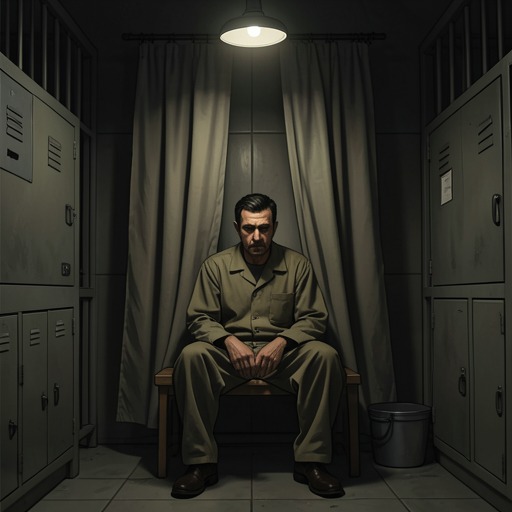
Collini Waits for Arrest
Collini waits on a sofa in the [Hotel Adlon](entity:location-recall-location-hotel-adlon-ec63c8b6d60e) lobby while the police are called. His bloody footprints lead from the suite through the lift to where he sits, making the case against him immediately plain.
He has waited all his life to answer for what he has done, and now he does not try to flee. The open admission of responsibility will coexist with a silence about motive that frustrates investigators and his lawyer.
The Sunday after the murder
Leinen Receives the Call
Newly qualified [Caspar Leinen](entity:character-recall-character-caspar-leinen-dfbe4df19f10) is called from the standby legal-aid roster and asked to represent a murder suspect. He arrives at the examining magistrate’s office expecting a routine first appointment as court-appointed counsel.
The case is treated as unusually important: [Senior Public Prosecutor Reimers](entity:character-recall-character-senior-public-prose-10e0e89193ca) has come in person. Leinen has no idea that the victim is the man who shaped his childhood.
The Sunday after the murder
Collini Rejects Counsel
Leinen meets Collini on the narrow stairs leading from the cells. Collini says that he does not want a lawyer and admits that he killed the man, but Leinen explains that a murder case requires a defense counsel.
Collini says he has no family or friends to contact and does not want to talk. Leinen tells him to remain silent until they have reviewed the case together.
The Sunday after the murder
The Remand Warrant
At the hearing, Collini gives his identity and occupation but says nothing about the killing. The magistrate issues a warrant for his remand, based on fingerprints, blood, gunpowder traces, and witness accounts.
Leinen requests access to the file, an oral review of the detention, and appointment as Collini’s court-appointed counsel. Afterward, the magistrate privately corrects him for wearing his robe in a nonpublic hearing.
The evening after the arrest
Johanna Learns the Victim’s Name
[Johanna Meyer](entity:character-recall-character-johanna-meyer-9457d4658c02) calls Leinen in tears after seeing the news. She tells him that Jean-Baptiste [Meyer](entity:character-recall-character-meyer-b771b4ab7a30), the name used in the warrant, is her grandfather, known to the family as [Hans Meyer](entity:character-recall-character-hans-meyer-7345ebff6a11).
Leinen realizes that the murder case is not merely his first major defense brief: the victim was the beloved elder who welcomed him into the Meyer family. He sinks to the floor as the conflict between his professional duty and personal grief takes shape.
The first days after the murder
Mattinger Joins the Case
[Richard Mattinger](entity:character-recall-character-richard-mattinger-4e2a485cfbc4) is asked to represent the [Meyer](entity:character-recall-character-meyer-b771b4ab7a30) family as accessory prosecutor. He studies the developing case, speaks with the company lawyer, and secures Johanna’s authorization to act for her.
He sees a murder with no apparent motive and a powerful company anxious to limit publicity. The old lawyer begins preparing to enter a trial that he expects to be straightforward, while privately sensing that the case has unanswered questions.
The first night after Collini’s arrest
Leinen Tries to Withdraw
Leinen spends the night drafting a petition to be released from Collini’s defense because he grew up with the victim’s family. He buys the newspapers in the morning and sees the killing dominating the headlines.
At the prosecutor’s office, he learns that [Mattinger](entity:character-recall-character-mattinger-371fa105e848) will act for the accessory prosecution. He is unsettled by the case’s publicity and by the weight of defending a man who has killed someone he loved.
The morning after Leinen drafts his petition
Mattinger’s Advice
In the courthouse lawyers’ room, Leinen tells [Mattinger](entity:character-recall-character-mattinger-371fa105e848) why he wants to withdraw and shows him the petition. Mattinger says the law does not make personal discomfort enough to release appointed counsel; Leinen should disclose his connection to the victim and let Collini decide whether he wants him to continue.
He tells Leinen that the mistake of accepting the brief is his, not his client’s, and that a defense lawyer must do his best for the person who has no one else. The advice forces Leinen to confront what his chosen profession demands.
The first days after the arrest
The Autopsy
Leinen attends the autopsy of [Hans Meyer](entity:character-recall-character-hans-meyer-7345ebff6a11) at the Forensic Institute. [Professor Wagenstett](entity:character-recall-character-professor-wagenstet-a746d0981eaa) carefully records the wounds, reconstructs the bullet paths, and documents the damage caused by Collini’s kicks.
The forensic detail overwhelms Leinen, who fixates on the stripes of a police officer’s shirt until he can leave the room. Reimers tells him the evidence points toward murder, leaving little apparent room for a defense based on the physical facts.
The days after the autopsy
Leinen Meets Collini in Prison
At [Moabit Remand Prison](entity:location-recall-location-moabit-remand-prison-97a7ff01746d), Leinen tells Collini that he knew the [Meyer](entity:character-recall-character-meyer-b771b4ab7a30) family and asks whether that creates a problem. Collini says it does not matter to him anymore because [Hans Meyer](entity:character-recall-character-hans-meyer-7345ebff6a11) is dead.
Leinen presses for a motive, but Collini refuses to explain. He agrees only to confess to the mechanics of the killing, and after leaving the interview room returns briefly to thank Leinen for continuing to represent him.
The day Leinen visits Collini in prison
The Baker’s Plain Counsel
Outside his building, Leinen tells the baker that he does not know whether he can defend a man who killed someone he knew well. The baker describes the work he has to do, however imperfect it is, and tells Leinen that a lawyer must do what lawyers do.
The ordinary conversation brings Leinen back to the responsibility he accepted. He decides to continue with the defense and tells Johanna that he will not abandon Collini, though he cannot give her the explanation she wants.
Two weeks after the arrest
Collini Confesses
Collini confesses during a police interrogation, describing how he posed as a journalist, arranged the meeting, and killed [Hans Meyer](entity:character-recall-character-hans-meyer-7345ebff6a11). He studies the graphic photographs of the murder before speaking, while Leinen guards against questions that would go beyond the facts of the crime.
When the officers try to move on to motive, Leinen ends the interview. A young officer later attempts to question Collini alone, but Collini orders him away, and the police thereafter respect the presence of counsel.
The six months after Collini’s arrest
The Investigation Finds Nothing
Police search Collini’s home and finances, investigate his work history, and make inquiries in [Italy](entity:location-recall-location-125be658b0d0). They find a quiet, reliable retired toolmaker with no criminal record and no evident connection to [Hans Meyer](entity:character-recall-character-hans-meyer-7345ebff6a11).
Collini refuses psychiatric examination and continues to withhold his motive. After months of investigation, the authorities have a victim, a confessed killer, and no explanation for their connection.
After six months of investigation
The Charges Are Filed
[Senior Public Prosecutor Reimers](entity:character-recall-character-senior-public-prose-10e0e89193ca) eventually reads the file again and brings a murder charge against Collini. He does not need to know the motive to prosecute, but the absence of an explanation leaves him uneasy.
The case moves out of the investigators’ hands and toward trial. Reimers hopes the court proceedings will reveal what the investigation could not.
The months before the trial
Leinen’s Early Practice
As Collini’s case waits for trial, Leinen takes on other criminal briefs and begins to establish himself in court. He visits Collini weekly, but the defendant remains courteous and silent about why he killed [Meyer](entity:character-recall-character-meyer-b771b4ab7a30).
Leinen and [Mattinger](entity:character-recall-character-mattinger-371fa105e848) meet on the old lawyer’s balcony to talk about past trials, without discussing the case they share. Their professional relationship grows even as they remain destined to oppose one another in court.
Two days after the murder charge reaches Leinen
Johanna Calls Leinen to Munich
Johanna asks Leinen to come to [Munich](entity:location-recall-location-munich-a2858688fbfd), where the [Meyer](entity:character-recall-character-meyer-b771b4ab7a30) company lawyer has arranged a meeting. The lawyer admits that the company’s archives contain no link between Collini and the firm and cannot explain the killing.
The meeting reveals how little anyone knows about the motive. Afterward, Leinen and Johanna find comfort in each other, their shared grief and old attraction briefly overriding the case between them.
The winter after the murder charge
Searching Rossthal
Leinen and Johanna go to [Rossthal](entity:location-recall-location-rossthal-6c7dae823ed4) to search [Hans Meyer](entity:character-recall-character-hans-meyer-7345ebff6a11)’s private papers for a clue. They move through the shuttered house, looking through files, photographs, and the carefully ordered remnants of his life.
Among the papers, Johanna finds a collection of documents Hans kept about Leinen’s childhood and later legal work. The intimacy of that discovery deepens their grief, but the search produces no explanation for Collini’s act.
The months after the murder charge
The Trial Is Scheduled
The regional court authorizes Collini’s arraignment and sets a short trial schedule, expecting to hear witnesses and expert evidence without major complications. A psychiatric expert is included, but the list of witnesses is limited.
[Mattinger](entity:character-recall-character-mattinger-371fa105e848) appears in the media and reminds reporters that the decision belongs in court. Leinen and Mattinger prepare for a case that the public assumes has a simple answer, despite the unexplained motive.
The night before the first trial day
The Night Before Court
[Mattinger](entity:character-recall-character-mattinger-371fa105e848) studies the case late into the night, thinking of his dead wife and the trials that made his reputation. Leinen also works through the files, searching for a detail that might restore order to a story he cannot understand.
He carries the white king from [Hans Meyer](entity:character-recall-character-hans-meyer-7345ebff6a11)’s chess set to court. The object links the looming public trial to the private childhood he is about to put at risk.
The first day of trial
The Arraignment
Courtroom 500 fills with journalists and spectators as Collini appears in a glass enclosure. The judge opens the proceedings, Reimers reads the charge, and Collini is reminded of his right to remain silent.
Leinen says that Collini does not wish to make a statement yet. After the courtroom empties, the judge warns the lawyers that she does not want surprises, making clear that the absence of a motive has become an urgent concern.
The first day of trial
Johanna Waits at Court
After the hearing, Johanna and Leinen leave together and walk through the park at Charlottenburg Palace. Neither can find a way to speak about the case or what it has done to their families.
They return to Leinen’s apartment, where their closeness briefly softens the strain. The next morning he takes Johanna to the airport, fearing that he is losing her as he once lost [Philipp](entity:character-recall-character-philipp-d45193a41691).
The first five days of trial
Mattinger Builds the Prosecution’s Picture
[Mattinger](entity:character-recall-character-mattinger-371fa105e848) questions the forensic pathologist in plain language about the shots, wounds, and kicks. He makes the jurors and spectators imagine a brutal attack on a defenseless old man, while the evidence seems to confirm the prosecution’s account.
The witnesses offer no surprises, and the press begins to lose interest. Leinen recognizes that he is losing the case and still has no way to defend a client who will not explain himself.
During the trial adjournment
The Pistol’s History
Late at night, Leinen remembers his father cleaning shotguns and takes another look at the crime-scene photographs. He recognizes the [Walther P38](entity:object-recall-object-walther-p38-a10134ee1b47) used in the murder and realizes it may provide a trail beyond the evidence of the killing itself.
He calls his father and then travels to [Ludwigsburg](entity:location-recall-location-ludwigsburg-73f8cb97dbf2), where he hopes to find records connected to the weapon and its history. A faint lead has given him a reason to search the past rather than merely argue the present.
During the ten-day adjournment
The Ludwigsburg Files
At the archive in [Ludwigsburg](entity:location-recall-location-ludwigsburg-73f8cb97dbf2), Leinen studies files connected to the Nazi period and the old investigations into wartime killings. The papers are difficult to interpret at first, but he works through them day after day, filling notebooks and ordering extensive copies.
The documents gradually reveal the connection between Collini’s father, the wartime execution, and [Hans Meyer](entity:character-recall-character-hans-meyer-7345ebff6a11). After returning to [Berlin](entity:location-recall-location-berlin-54cb4a75d0f6), Leinen visits Collini in prison and understands how he must present the defense.
The night before the trial resumes
Baumann’s Offer
At [Richard Mattinger](entity:character-recall-character-richard-mattinger-4e2a485cfbc4)’s birthday party, [Holger Baumann](entity:character-recall-character-holger-baumann-fd2818d8b344) finds Leinen by the lake and urges him to abandon the defense. He offers to arrange another appointed lawyer, then proposes money and lucrative future work if Leinen will let the trial end quietly.
Leinen understands that the company fears what he has uncovered and refuses the offer. The attempted bribery confirms that the old case threatens more than the reputation of one dead industrialist.
The seventh day of trial
Leinen Begins His Statement
Leinen tells the court that Collini will give evidence and begins reading a carefully prepared account drawn from the defendant’s story and the [Ludwigsburg](entity:location-recall-location-ludwigsburg-73f8cb97dbf2) files. He speaks in restrained legal language, but the account brings the wartime events into the courtroom as lived experience.
For Leinen, the testimony changes the meaning of criminal procedure. He recognizes that the process is about human beings who have been abused, not merely legal categories and evidence.
During Leinen’s testimony about 1943
The Wartime Story Begins
Leinen recounts [Fabrizio Collini](entity:character-recall-character-fabrizio-collini-36e3b3a1d7d1)’s childhood in rural [Italy](entity:location-recall-location-125be658b0d0) and the day German soldiers take his father. He describes the sister’s desperate attempt to hide Fabrizio when a soldier returns to the farm.
The account turns the defendant from a silent figure in the dock into a child caught in a violent occupation. The court begins to see the personal history behind the murder charge.
During Leinen’s account of 14 November 1943
The Sister’s Death
Leinen describes the assault on Fabrizio’s sister and the gunshot that kills her. Fabrizio escapes to [Uncle Mauro](entity:character-recall-character-uncle-mauro-9160fbad48fc), who later tells him that the farm has burned and his sister is dead.
The story exposes the violence that precedes the later execution of Fabrizio’s father. It also explains why the child’s losses become inseparable from [Hans Meyer](entity:character-recall-character-hans-meyer-7345ebff6a11)’s name.
During Leinen’s testimony about the days after 14 November 1943
Meyer’s Name in the Records
Leinen recounts how [Uncle Mauro](entity:character-recall-character-uncle-mauro-9160fbad48fc) travels to [Genoa](entity:location-recall-location-genoa-e7c43cca04b7) and returns with an official document naming [Hans Meyer](entity:character-recall-character-hans-meyer-7345ebff6a11) as the officer responsible for prisoners in the German security service. The notice gives Fabrizio’s family the first direct information about his father’s fate.
In the courtroom, the name links the boy’s loss to the man later killed at the [Hotel Adlon](entity:location-recall-location-hotel-adlon-ec63c8b6d60e). The revelation shocks the spectators and transforms the apparent lack of motive into a history of vengeance.
The seventh day of trial, at midday
The Court Adjourns
After identifying [Hans Meyer](entity:character-recall-character-hans-meyer-7345ebff6a11) as the officer named in the wartime record, Leinen asks to continue his statement on another day. He says that Collini is exhausted and that the account will require two or three more days.
The presiding judge is displeased, but the court adjourns. Johanna, pale and shaken by the revelation about her grandfather, asks Leinen to get her away from the courthouse.
After the seventh day of trial
Johanna Questions the Story
Leinen drives Johanna to a lakeside wood, where she asks whether the wartime account is really true. He believes it happened, though he wishes he could reassure her with a different answer.
Johanna accuses him of ruining everything and says the profession is cruel. Leinen can only remember the ordinary kindness Hans showed him, now made impossible to separate from the crimes revealed in court.
During Leinen’s testimony about 16 May 1944
The Café Trento Retaliation
Leinen describes the bombing at [Café Trento](entity:location-recall-location-caf-trento-222bc23e6d03) and the German response. The authorities select twenty prisoners who had no demonstrated connection to the attack and take them to a ravine for execution.
The prisoners are forced to watch those ahead of them die, while the interpreter sees the killing close enough to remember it for the rest of his life. The account exposes the brutality concealed by the official language of reprisal.
During the wartime testimony
Collini’s Father Is Named
Leinen identifies Nicola Collini as one of the prisoners taken from [Marassi Prison](entity:location-recall-location-marassi-prison-24548c0b2dc6) and killed in the reprisal. The interpreter had preserved the list of names, and Fabrizio’s father is the first name on it.
The testimony gives the killing a specific victim and connects it to Collini’s complaint decades later. [Hans Meyer](entity:character-recall-character-hans-meyer-7345ebff6a11)’s role as commander is no longer a conjecture or a family suspicion.
After the Second World War
The Interpreter’s Condemnation
Leinen tells the court that the interpreter is condemned to death by the Extraordinary Court in [Genoa](entity:location-recall-location-genoa-e7c43cca04b7) in 1945. His account has shown the interpreter’s involvement in the execution and the burden of witnessing it.
The detail complicates the story without excusing the killings. The trial is now examining not only Collini’s act but the institutions and moral compromises that carried wartime violence forward.
The day Leinen’s testimony concludes
Collini Explains the Delay
[Richard Mattinger](entity:character-recall-character-richard-mattinger-4e2a485cfbc4) asks why Collini waited so long to kill [Hans Meyer](entity:character-recall-character-hans-meyer-7345ebff6a11). Collini rises and says his aunt could not have borne seeing him imprisoned in Germany; he waited until her death before acting.
It is the first time Collini speaks at length in court, and he insists that the explanation is his to give. His answer reveals the private timetable behind the decades-long delay, but offers no claim that revenge can undo the past.
The following day of trial
Mattinger Defends Meyer
[Mattinger](entity:character-recall-character-mattinger-371fa105e848) argues that the wartime shooting may have been permissible under the international law of the time. He requests permission to call Dr Sybille Schwan, director of the [Ludwigsburg](entity:location-recall-location-ludwigsburg-73f8cb97dbf2) archive, to explain the legal standards for reprisals.
The presiding judge allows the unexpected witness to testify. Mattinger’s strategy is to restore [Hans Meyer](entity:character-recall-character-hans-meyer-7345ebff6a11)’s standing by showing that the execution might have met the rules then in force.
The following day of trial
Schwan Describes Reprisal Law
Dr Schwan explains that reprisals were sometimes treated as lawful if strict conditions were met: the real attackers could not be found, civilians were not tortured, women and children were not killed, and the response was not excessive. She says the execution of adult men at a ratio of one to ten could likely have been considered legitimate under the standards of the time.
Her testimony initially strengthens [Mattinger](entity:character-recall-character-mattinger-371fa105e848)’s argument. The courtroom is forced to confront how law can make a mass execution appear permissible without resolving its moral character.
The following day of trial, before lunch
The Investigation’s Apparent Exoneration
[Mattinger](entity:character-recall-character-mattinger-371fa105e848) asks whether [Hans Meyer](entity:character-recall-character-hans-meyer-7345ebff6a11) was investigated and learns that the [Stuttgart Public Prosecutor’s Office](entity:organization-recall-organization-ada4fe276d6a) opened proceedings from 1968 to 1969 but never charged or questioned him. Mattinger presents the discontinuation as if it supported the legality of the execution.
He concludes that [Meyer](entity:character-recall-character-meyer-b771b4ab7a30) has not been shown to be a murderer and smiles, believing he has won. Collini bows his head and cries as the legal argument seems to erase his father’s death a second time.
The following day of trial, after lunch
Leinen Reopens the Issue
When the judge is about to discharge Dr Schwan, Leinen interrupts and asks who filed the original complaint against [Hans Meyer](entity:character-recall-character-hans-meyer-7345ebff6a11). Schwan answers that it was [Fabrizio Collini](entity:character-recall-character-fabrizio-collini-36e3b3a1d7d1), and that he received the notice of discontinuation in 1969.
Leinen then establishes that the proceedings were not dropped because a court found the shooting lawful. They ended because the statute of limitations had taken effect, leaving [Meyer](entity:character-recall-character-meyer-b771b4ab7a30)’s guilt or innocence untested.
The following day of trial, during Leinen’s cross-examination
The Limitation Loophole
Leinen asks Dr Schwan to explain the 1968 change that made the investigation impossible. She traces the effect to the [Introductory Act to Administrative Offences](entity:rule-recall-rule-introductory-act-to-admi-6a6de8c26653) and the changed treatment of accessories to murder under Section 50.
The legal classification meant that many Nazi-era officials could be treated as accessories rather than murderers, and their crimes could become time-barred. The alteration had escaped notice when passed, but its consequences were irreversible under the rule of law.
The following day of trial
Dreher’s Law Is Exposed
Dr Schwan explains that [Dr Eduard Dreher](entity:character-recall-character-dr-eduard-dreher-cdb7eb25d803)’s amendment effectively shielded many accessories to Nazi crimes from prosecution. The legal system had treated most participants who obeyed or carried out orders as accomplices, and the limitation rule then closed cases that might otherwise have proceeded.
Leinen points out that Dreher later became the namesake of a standard criminal-law commentary used throughout the courts. The revelation turns an obscure technical change into a national scandal about how legal machinery can protect those it ought to judge.
The following day of trial
Meyer’s Conduct Reconsidered
Leinen asks how a court today might judge [Meyer](entity:character-recall-character-meyer-b771b4ab7a30)’s role in the execution. Dr Schwan says the manner of the killings—prisoners seeing those shot before them and falling into a pit—would likely lead the [Federal Supreme Court](entity:organization-recall-organization-federal-supreme-6f56ea3bf509) to regard Meyer as an accessory to murder.
She also makes clear that the limitation period would still protect him. The testimony separates two questions that had been blurred: whether the act was cruel and whether the law still permits prosecution.
After the testimony of Dr Sybille Schwan
Collini Rejects Victory
After the court adjourns, Collini tells Leinen that he does not believe they have won. He repeats an Italian saying that the dead do not seek revenge; only the living do, and he has spent his time in prison thinking about it.
Leinen acknowledges the wisdom of the saying. The exchange shifts the meaning of the case away from courtroom triumph and toward the living burden carried by those who remain.
After the testimony of Dr Sybille Schwan
Mattinger Leaves the Trial
Outside the courtroom, [Mattinger](entity:character-recall-character-mattinger-371fa105e848) congratulates Leinen on anticipating his move and defeating his argument. He nevertheless insists that courts cannot judge people by the standards of a later political climate, and says that if [Meyer](entity:character-recall-character-meyer-b771b4ab7a30) acted lawfully by the standards of his own time, he cannot be blamed now.
Leinen replies that cruelty does not become acceptable because earlier judges might have approved it. Mattinger says their disagreement is about the spirit of the age, then withdraws from the trial and offers Leinen a partnership after the case.
After the testimony of Dr Sybille Schwan
Johanna Fires Baumann
[Mattinger](entity:character-recall-character-mattinger-371fa105e848) tells Leinen that Johanna has fired [Holger Baumann](entity:character-recall-character-holger-baumann-fd2818d8b344) after learning that he tried to bribe her former childhood friend. The attempted offer has confirmed that the company wanted the case silenced, even if Johanna herself had not known of the plan.
Mattinger leaves for his holiday, and the courtroom contest is now Leinen’s to continue. The personal and corporate stakes have both shifted as the trial approaches its final stage.
The night before the tenth day of trial
Collini’s Suicide
[Fabrizio Collini](entity:character-recall-character-fabrizio-collini-36e3b3a1d7d1) takes his own life in his cell at [Moabit Remand Prison](entity:location-recall-location-moabit-remand-prison-97a7ff01746d). His death comes before the trial can reach a verdict, after the evidence has exposed the wartime execution and the legal barrier that prevented [Meyer](entity:character-recall-character-meyer-b771b4ab7a30) from being tried.
The act ends Collini’s chance to hear a judgment on the murder charge or to see his history answered in court. His silence, maintained throughout the proceedings, becomes final.
The tenth day of trial
The Trial Is Terminated
Leinen arrives at court expecting the hearing to resume, but learns that Collini has died. The presiding judge announces that the trial is discontinued and that the state will bear the costs and necessary expenses.
A police officer gives Leinen a sealed envelope from his client. Inside is a photograph of Collini’s sister, with a brief apology written on the back.
After Collini’s death
Johanna Returns to Leinen
Leinen leaves the courthouse by a side entrance and drives home. Johanna is waiting on the steps outside his building, her coat pulled tightly around her against the cold.
She asks whether she is all those things too, confronting the implication that her grandfather’s history may touch her identity. Leinen tells her that she is who she is, while children argue over a bucket in the nearby playground and the ordinary future continues around them.
January 2012
The Ministry Reappraisal
A few months after the novel’s German publication, the Federal Minister of Justice appoints a committee to examine the legacy of the Ministry’s Nazi past. The inquiry revisits the institutional history that the case has brought into public view.
The novel itself becomes one of the committee’s points of reference. The story’s legal controversy thus reaches beyond the courtroom and back into the institutions whose actions shaped the old investigation.